
Rethinking Your Optometry Career Opportunities: How Rural Practice Can Fast-Track Success
When Erin Poirier graduates from the University of Waterloo’s School of Optometry this year, she won’t be starting out in a glass-walled office tower or corporate chain. Instead, her first job in optometry brings her back to the rural stretch of Southern Ontario where she grew up. Here, in a region where access to care has long been uncertain, she’ll begin her first role at Optometrists on Broadway in Tillsonburg.
That clinic is led by OSI Group Member Dr. Matthew Michniewicz, an independent optometrist who has spent years mentoring new grads and building a thriving rural practice rooted in relationships and community. Erin will be the latest in a long line of young clinicians to benefit from his guidance—and to discover how quickly confidence builds when care is needed close to home.
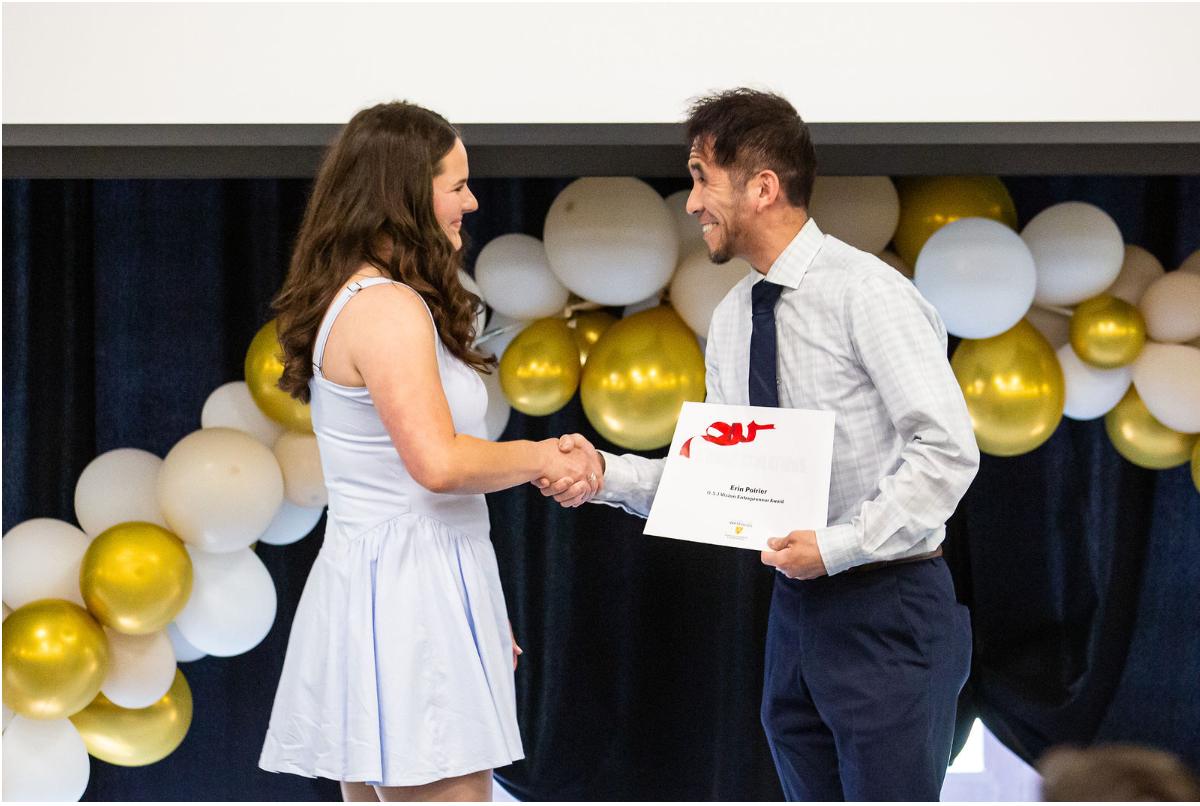
As the 2025 recipient of OSI’s Vision Entrepreneur Award, Erin represents a new generation of optometrists seriously engaging with the question of independent practice vs. corporate optometry. These days, more and more graduates are seeing the former as a way to accelerate their growth while building something meaningful from day one.
The Case for Rural Optometry Jobs
One of the first surprises for many new professionals is how quickly things move in a rural optometry practice. Contrary to the belief that rural careers develop slowly, the reality is often the opposite: high demand and long patient waitlists mean full schedules and meaningful work from day one.
“Rural areas do need a lot more support than the cities when it comes to optometric care,” says Dr. Michniewicz. “They offer a lot of opportunity to get busy right from the get-go, as opposed to spending a few years to really build up that patient base.”
Working in these settings also changes the nature of the job itself. Clinicians collaborate more closely with family doctors and ophthalmologists and take on a broader range of responsibilities—accelerating early-career growth and challenging how we define optometry student success in the real world. As Dr. Michniewicz notes, “It involves managing a lot of cases with a lot more hands-on involvement.”
Shaping Your Practice Your Way
The pace of rural practice is matched by a degree of autonomy rarely found in larger corporate settings. Independent optometry doesn’t hand new associates a rigid system to slot into; rather, it invites them to help shape how care is delivered. Decisions about scheduling, appointment length, diagnostic tools, and even investments in new technology are often built around what best serves both the clinician and the community.
“Each independent clinic is unique,” says Dr. Michniewicz. “Your control over schedule, type of equipment, tools, and staff gives the associate and the owner quite a bit more say in how their clinic environment runs. You can often work with the clinic owner to discuss things like plans for new diagnostic equipment, changes to procedures, and policies.”
That freedom also extends to the day-to-day. New optometrists decide how they want their patient flow to look, how their exam rooms are set up, and how they move through each appointment.
Immersion from Day One: Onboarding Optometry Graduates
At Optometrists on Broadway, new professionals begin with a hands-on introduction to the clinic—meeting the team, setting up their space, and learning the ins and outs of the diagnostic tools. It’s a chance to understand the rhythm of the practice before their first exam.
Once patients start coming through the door, the pace is immediate. “The most surprising thing for a lot of them was how many triages or emergency care cases they saw within the first week or two of joining the practice,” says Dr. Michniewicz. “Everything from retinal tears and detachments to foreign bodies and metal in the eye.”
Early exposure to high-stakes cases builds clinical confidence quickly. Erin experienced this firsthand during an internship in a remote Saskatchewan community, where the local optometrist was often the first, and only, point of contact for patients seeking eye care.
In rural settings, textbook knowledge becomes muscle memory, and decisions that once felt uncertain quickly start to feel instinctive. And for those like Erin who have had some exposure already—through optometry externship opportunities or summer jobs in optometry—the transition tends to come even faster.
Mentorship in Optometry: Professional Growth Built Over Time
Indeed, the foundation of these externships and early career success is mentoring. The demands of rural care can be daunting at first, but strong optometry mentorship helps turn that pressure into growth.
“I try to remind everybody that we all have a day one,” says Dr. Michniewicz. “We have our education behind us, but that first day, that first week, that first month is always a little bit anxiety-provoking because now you are in the driver’s seat.”
Working alongside experienced clinicians like Dr. Michniewicz provides a safety net while new optometrists develop their clinical instincts. Over time, the support extends beyond technical skills, shaping how young practitioners communicate their recommendations and earn trust. It’s one of the most crucial drivers of optometry professional growth.
For Erin, that degree of input is a major part of the appeal. It allows her to shape the patient experience around the kind of care she believes in, aligning with the values that brought her into the profession in the first place.
With the right guidance, building confidence as a new OD becomes part of the day-to-day—and patients respond in kind, following treatment plans more closely and engaging more deeply in their care.
Optometry Student Success: Building a Life, Not Just a Career
Erin’s return to Southwestern Ontario is driven by the opportunity to work where patients know their optometrist by name, where a single clinic can shape the health of an entire community.
It’s the kind of motivation Dr. Michniewicz recognizes in many young optometrists—and one he works hard to support once they arrive. As an OSI Group clinic owner, he sees firsthand how new graduates hold onto their early sense of purpose and transform it into long-term success.
“It’s tough to know precisely what you’ll like and how long you’ll enjoy it until you actually start working and experiencing the environment you’ve chosen,” he says. “Sometimes it’s easy to get stuck somewhere out of comfort and convenience. After several years, you might look back and realize that you’re not where you really wanted to be. So keep exploring — try different environments, see how they feel—and build a schedule and a life that you truly like.”
Optometry Career Development Starts With a Sense of Place
A rural independent practice can be a proving ground—a place where skills sharpen quickly and the work stays deeply tied to purpose. With programs like OSI Group’s Vision Entrepreneur, structured mentorship, and clear independent optometry ownership opportunities, new graduates have more pathways than ever to shape their futures intentionally from the start.
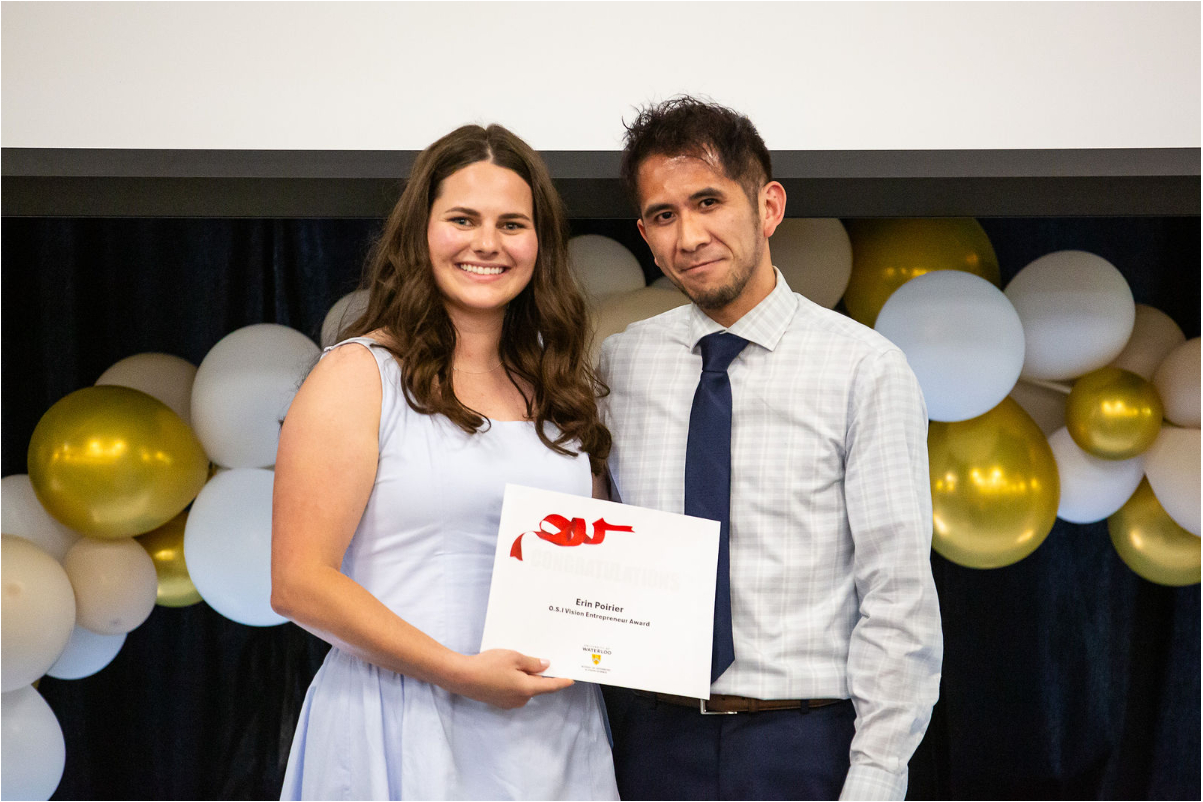
For this year’s Vision Entrepreneur Award winner, that journey begins in Tillsonburg—a reminder that optometry career development doesn’t depend on population size but on the strength of a clinic’s commitment to growth. Congratulations to Erin Poirier, and to Dr. Matthew Michniewicz for their shared dedication to the craft and the communities they serve.
If you’re a student ready to explore externships in optometry, summer positions, or future ownership paths, take inspiration from Erin’s example. Purpose-driven practice begins where community and opportunity meet.
Learn more about OSI Group’s Vision Entrepreneur program at visionentrepreneur.ca

Latest Articles

Far from the City, Close to the Work: What Two Optometrists Discovered Going Rural

Buying an Optometry Practice: 9 Steps to Success

Buying Shares vs. Assets in an Eyecare Practice: Pros, Cons, and How to Choose